Josef is a 72-year-old man who lives alone and relies on a cane to get around. He is a keen chess player and enjoys activities that keep his mind active, such as reading, puzzles and board games. Every year, he looks forward to attending the national chess championship, where he can watch top players compete and meet friends from his local chess club. While he can walk independently on flat surfaces, a previous fall has left him with a persistent fear of falling again. He also has a significant hearing impairment, making it difficult to hear announcements or ask for help in busy public spaces. His children live in another city and usually visit only at weekends, helping him with shopping, errands and medical appointments whenever they can.
One Tuesday morning, Josef receives a reminder that the national chess championship is taking place next month. He has been looking forward to the event, but soon realises that getting there may be difficult. Normally, one of his children would accompany him on longer journeys, but this time neither of his children are available due to work commitments. The venue is too far away for Josef to walk, and a taxi would cost a significant portion of his weekly pension. For a moment, Josef considers staying at home, disappointed at the thought of missing an event that is important to him.
Josef’s grandchildren have helped him to set up a smartphone, but he uses it only in a limited way. He enjoys looking at family photos, completing his daily word search and reading news articles, but he lacks confidence when navigating apps or interpreting real-time information. Public transport apps feel particularly overwhelming, with unfamiliar icons, maps and constantly changing updates. He worries that pressing the wrong button might cause problems or leave him stranded. As a result, he rarely uses digital tools independently and instead relies on others for travel information and support.
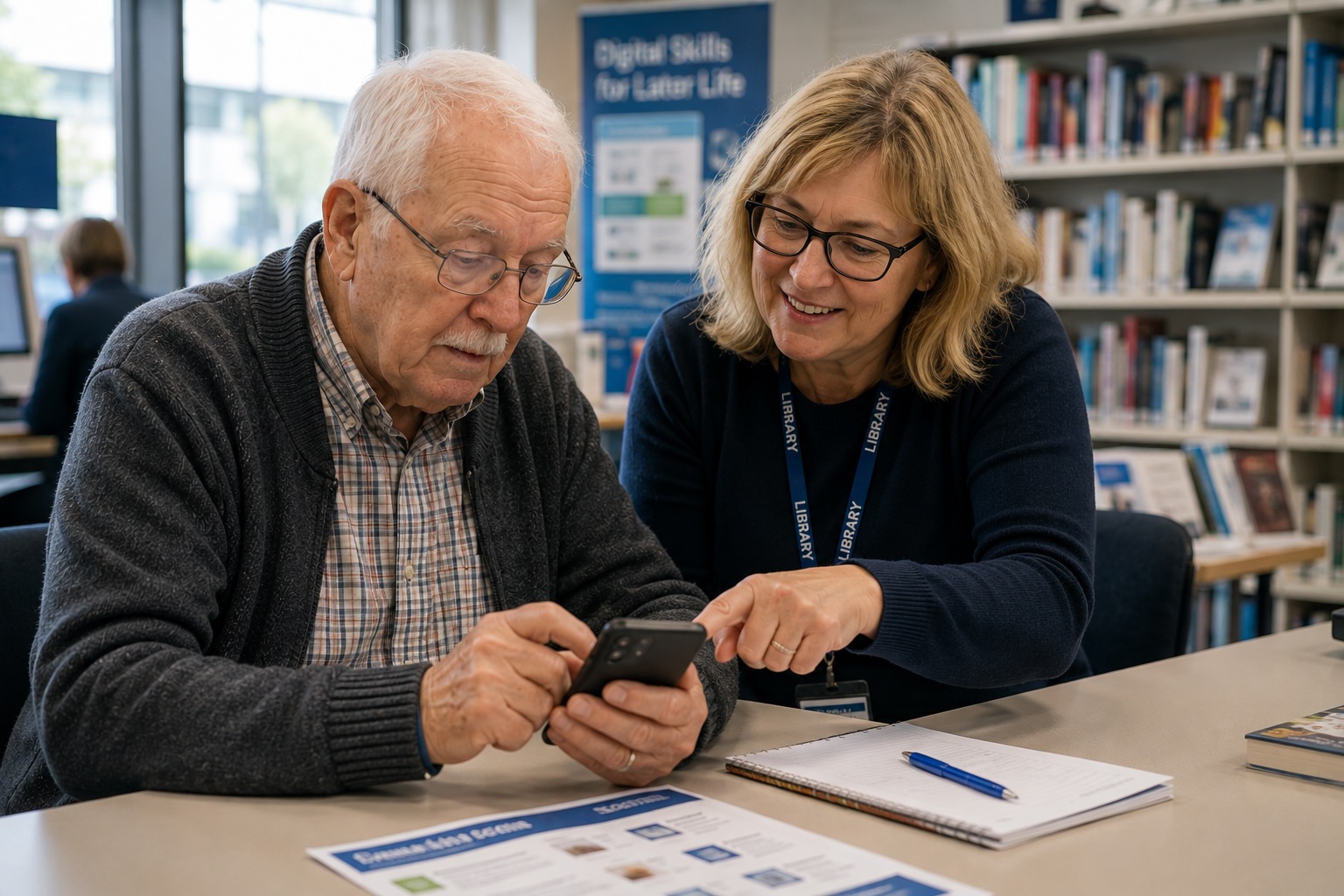
Determined not to miss the championship, Josef visits his local library after hearing about free digital training sessions for older adults. He already knows several of the library staff and appreciates their patience and friendliness. Library staff help Josef place the public transport app on the first screen of his phone so it is easy for him to find it. This makes a big difference because Josef becomes anxious when searching through multiple screens, particularly when he feels rushed in a queue or in a busy travel environment. During several practical training sessions, he learns how to check bus arrival times, identify the correct route and access travel information step by step. Being able to practice in a supportive environment helps reduce his fear of making mistakes and gradually builds his confidence to try travelling independently.
The library also introduces him to a community travel support programme that works alongside senior support services. Through the programme, Josef is matched with a volunteer “Bus Buddy” who accompanies him on his first journey using public transport. Together, they practice reading route information, identifying the appropriate bus stop and boarding the bus. Josef asked the volunteer for patience during this practice due to his hearing impairment. What initially feels intimidating becomes more manageable with guidance and encouragement. Josef also enjoys the social side of the experience. The conversations during the journey make travelling feel less stressful and more enjoyable, and he begins to look forward to seeing his “Bus Buddy” as much as the trip itself.
Josef also notices that recent improvements to the public transport system make travelling easier. Bus stops now display clear route maps and diagrams, while colour-coded lines, numbered routes, pictograms and universal symbols make navigation more intuitive. Digital displays provide clear visual information about arrivals, departures and service changes, reducing reliance on audio announcements. Many information screens and video messages have now large-text subtitles, captions and other visual cues making important travel information more accessible for passengers with hearing impairments. At larger stations, trained staff and volunteers are available to provide assistance when needed. When Josef is unsure about a journey, he can call a 24/7 transport information service through the telephone to check departure and arrival times without needing to rely solely on digital tools.
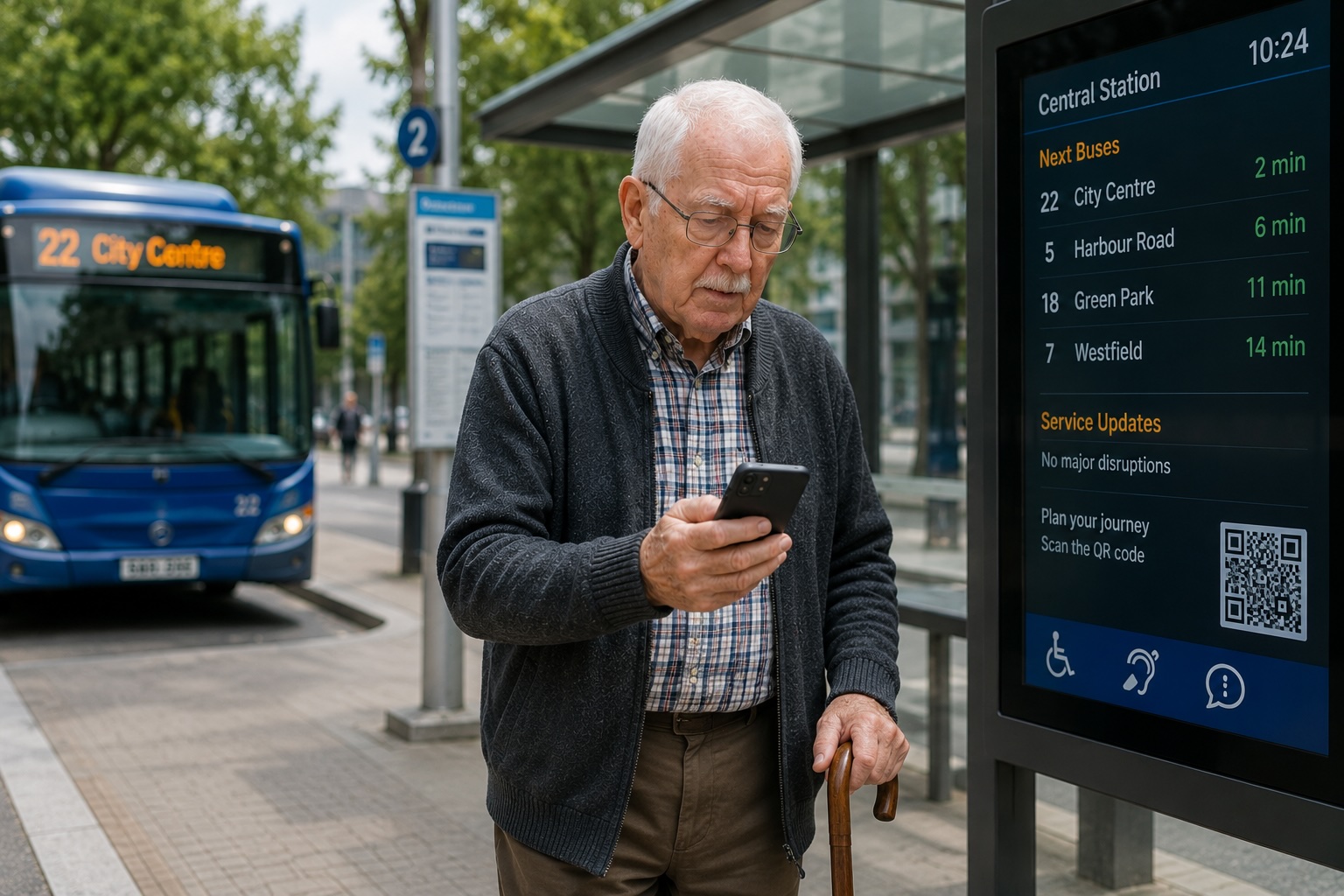
By the day of the championship, Josef feels confident enough to make the journey with only limited support. Using the app to check when his bus will arrive, he successfully travels to and from the event and enjoys spending the day with fellow chess enthusiasts. The experience gives him confidence that he can travel independently when he needs or wants to. Since attending the championship, he has become increasingly comfortable using real-time travel information and planning journeys on his own. He has also learned that the app can be used to book an accessible reduced-fare transport service if his mobility needs change in the future.
For Josef, the challenge was never just learning to use an app. It was overcoming the fear, uncertainty and dependence that had gradually limited his mobility and participation in activities he enjoyed. By combining accessible digital services, practical training, community support and inclusive transport design, Josef is able to travel more independently and remain connected to the people, places and interests that matter most to him. As an added bonus, he has developed a friendship with his “Bus Buddy” and now tells his chess friends about this support programme, encouraging others who may be hesitant about travelling independently to give it a go.
Details about the development of the T3.3 vignettes can be found here:
Tatzer-Hanten, V. C., Vardaki, S., Morgenthaler, T., Rudaitienė, R., Egger, S. M., Margot-Cattin, I., & Gaber, S. N. (2027). Narratives on inclusive mobility: Public transport innovations for older adults in Europe and beyond, Re-Generation in Transport, Proceedings of the 11th Transport Research Arena Conference, Budapest, Hungary, Lectures Notes on Mobility, Springer: Chams (in press).
Check out here more details about WG3 of BOPALiM.