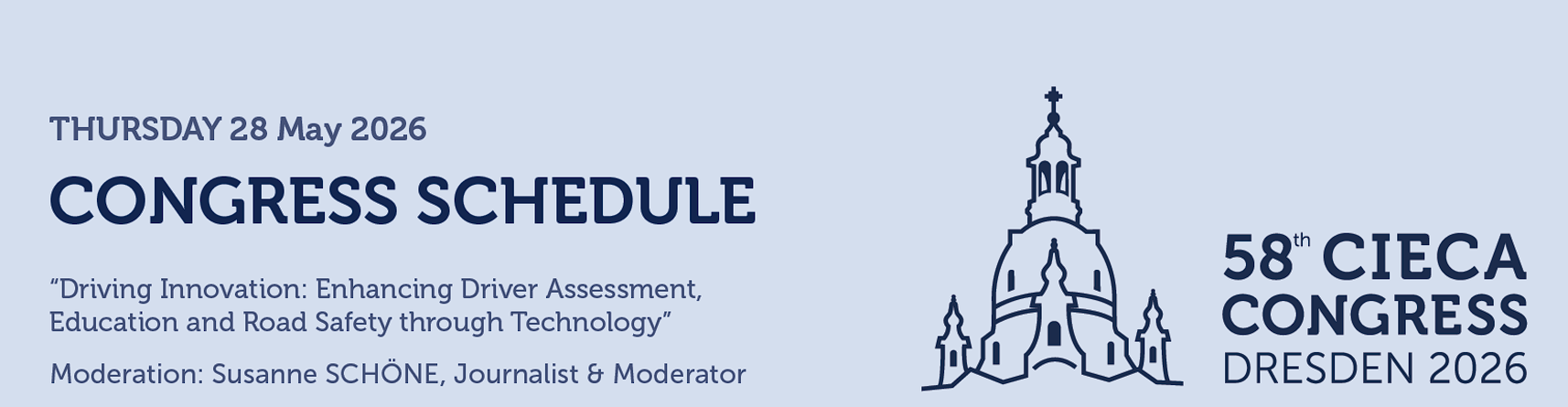
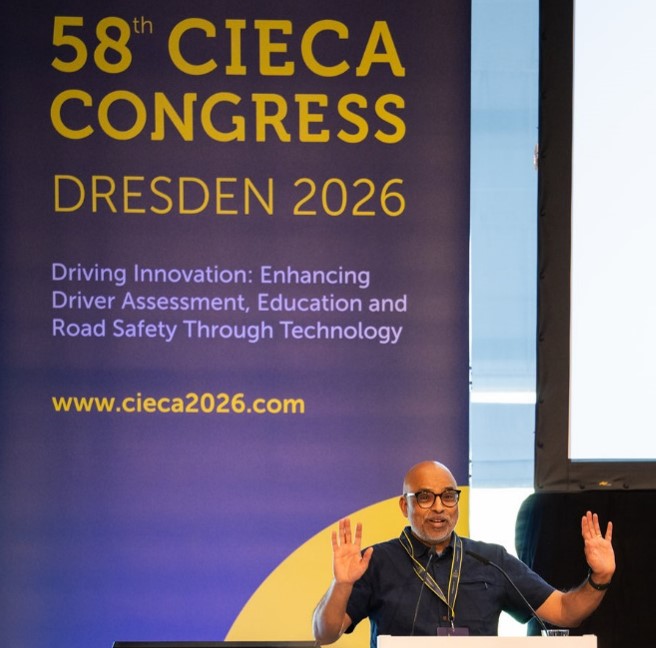
BOPALiM expert presented a practitioners’ insight about fitness to drive at the 58th CIECA congress, held in Dresden. CIECA is the International Commission for Driver Testing, active in the fields of road safety and driver testing, with 75 members in 39 countries. Dr Anuraj Varshney, who was honoured with the RCOT merit award in 2025, has vast experience about driving assessments in the UK, delivered a presentation at a fitness to drive and simulators session. His presentation focused on ADAS training and simulator-based functional evaluations across a national driver assessment network in the UK. This context is directly relevant to the WG1 Tasks of BOPALiM and provides valuable insights for practitioners, policy makers and individuals across Europe.
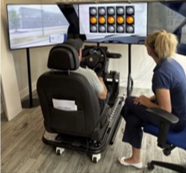
His presentation at CIECA offered evidence about the benefits of using static assessment rigs to develop structured and standardised assessments about fitness to drive. Such equipment aid in understanding how drivers compensate for any deficiencies they may have, without replacing on-road assessment which should remain a core driving assessment element. In contrast, such equipment complements on-road assessment by supporting and enhancing it, whilst using more efficiently the time and resources of driving assessors. At the same time, such equipment can provide valuable information regarding essential vehicle adaptations, when assessing drivers with disabilities.
Driving assessment centres have adopted this integrated approach since 2025, which has been deployed in 2026 across all UK nations, namely England, Wales, Scotland and Northern Ireland. Staff trained to use these driving simulators, which support fitness to drive assessments, are primarily Occupational Therapists, but also include driving instructors. A range of fitness to drive assessment simulators were reviewed, including the SimFit2Drive one, which can accommodate a series of disability adaptations as outlined in a BOPALiM 2026 webinar. Future research will focus on correlating driving simulator outputs with on-road testing outputs to improve a holistic fitness to drive approach. This will serve older individuals and those with disabilities to increase accessibility while maintaining their community mobility.