This WG1 linked webinar focuses on the role driving simulators can play as part of a broader assessment eco-system. Maintaining safe mobility across the lifespan is an increasingly important research and societal priority, also aligned with BOPALiM objectives. As populations age and more individuals remain active drivers for a longer time, a growing need exists for reliable methods to assess driver fitness while supporting independence and societal participation.
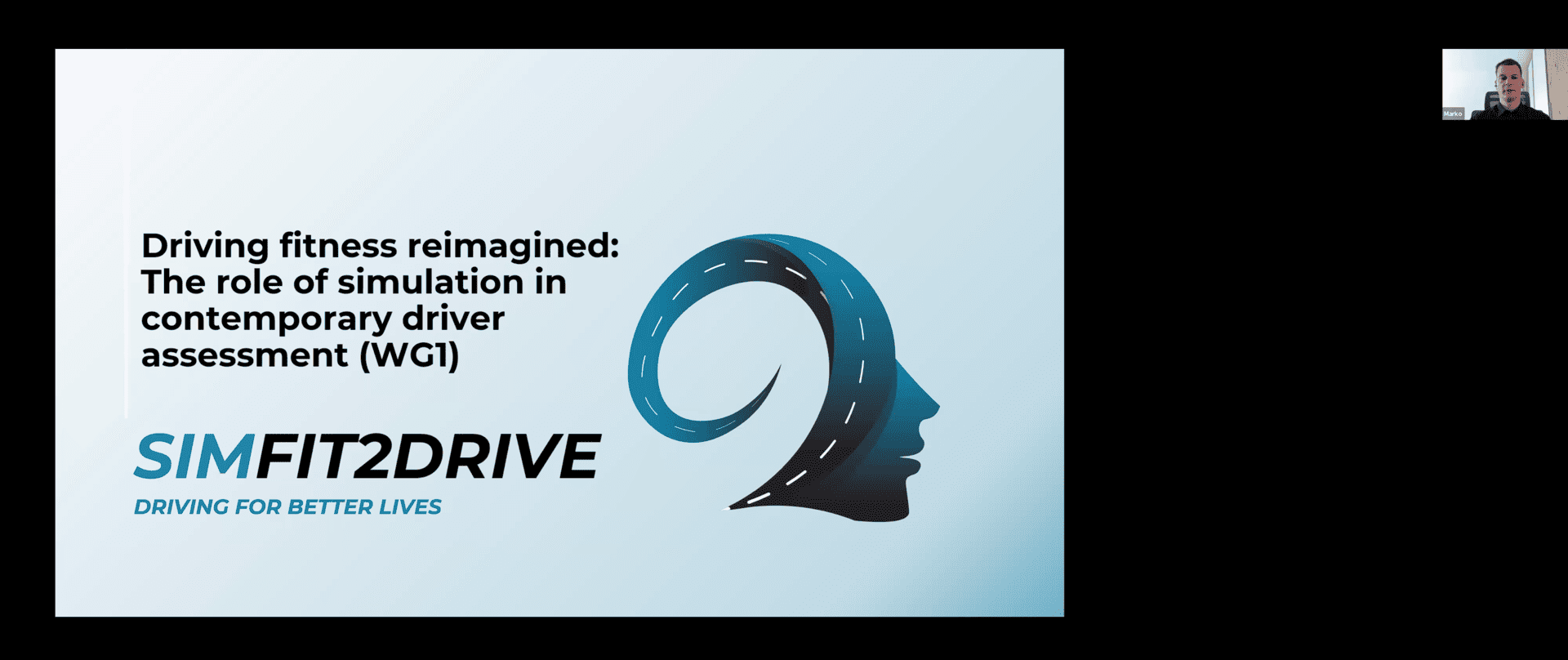
Marko Gluhak explores the role of driving simulators as an emerging tool for driver fitness assessment. Simulator-based testing enables the controlled and periodic evaluation of cognitive, perceptual, and motor abilities relevant to safe driving, while allowing complex or high-risk traffic scenarios to be reproduced in a safe environment for all parties involved. Such approaches can complement existing clinical screening and on-road assessments by providing objective performance data and standardised testing conditions.
The webinar is delivered by a YRI and shares practical experiences from centres implementing simulator-based assessment in real-world environments. Drawing on examples from Slovenia and the United Kingdom, this webinar highlights different implementation pathways, operational considerations, and lessons learnt when integrating simulation technologies into driver evaluation workflows.
By connecting practical implementation with the broader goals of BOPALiM, the webinar aims to contribute to knowledge exchange on behavioural assessment, mobility safety, and evidence-based approaches that support healthy ageing and safe participation in traffic. This webinar is hosted by our WG4 Leader, Dr Nikolas Thomopoulos, on Monday 30th March 2026 at 13:00 – 13:30 CEST.
Marko Gluhak is the CEO of SimFit2Drive, a spin-out company in Slovenia. He leads the development of SimFit2Drive, a simulator-based system designed to objectively assess driver fitness by evaluating cognitive, sensory, and motor abilities relevant to safe driving. His work focuses on bridging research, clinical practice, and mobility services to improve evidence-based driver evaluation. Marko is actively involved in European research and innovation initiatives that promote safer and more inclusive mobility across Europe.